观点正文
Dreams Flood Into Reality
2007-01-01 00:00:00来源:艺术家提供
A-
A+
Astrologist; goddess of the auction block; “Big Sister” in the avant-garde artist face book; obedient daughter; talent of the Sichuan Fine Arts Academy; 29 year-old Sichuanese girl who came to Beijing to work––is it possible to hang all these descriptions on one single person? No matter if its possible or not, these are my broadest brush stroke generalizations of Chen Ke.
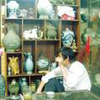
“With you, I’ll never be lonely,” is Chen Ke’s current exhibition in Star Gallery, beginning this spring, Chen Ke began to collect dozens of relics from to her childhood, moving the objects of her childhood memories thousands of miles from Sichuan to her Beijing studio, all in order to complete a plan that she has been brewing for a very long time. After several months of dreaming about this work, these precious objects from Chen Ke’s past and her world-renowned painting finally merged together to complete this enormous painting installation. They take us into a young woman’s spiritual world of subtlety and milk and honey. Every time I stand before this work, the perhaps irrelevant title of Wang Shuo’s novel pops into my head: Dreams Flood Into Reality.
Fang Fang: When did you begin to prepare for this work “With you, I’ll never be lonely”?
Chen Ke: Last March or April.
FF: Just when your paintings are selling so well, you suddenly stop painting and start doing installation work. Are you unsatisfied with mere two-dimensional painting?
CK: A little bit, I’m a person that likes change. I feel life is repetitive, only when I’m making art do I feel that every day is new.
FF: You’ve painted for so many years, do you ever have moments of tedium?
CK: To be honest, I do.
FF: When, for example?
CK: When a work is taking too long, when my own ideas start to change.
FF: And what happens then?
CK: I’ll finish it, if I don’t like it I’ll abandon it before its finished.
FF: This works seems more coherent. While you were finishing it, I felt a kind of conclusive enthusiasm.
CK: Yes, I wanted to prove myself. I don’t want people to think of me as only a well-selling painter.
FF: You weren’t afraid that this kind of experiment wouldn’t be accepted?
CK: I really didn’t think of that while I was making it, I really felt that I was experiencing one beautiful, dangerous journey and the process was very enjoyable, the result was then less important.
FF: When I see this artwork, it evokes so many of my own memories.
CK: Did you have a similar childhood?
FF: Your work takes me back to my childhood years, its like going into some dream about my childhood. The red scarves, tests, physical education class, art class… it’s almost exactly the same. I’m actually very much anticipating autobiographical works from artists in our generation, because I’ve discovered that the first films of many directors that I like are autobiographical depictions of their childhood.
FF: Where did these “materials” come from?
CK: From the second-hand market, and also from my father and mother who searched through our home.
FF: What did you do after you brought these antiques to your studio?
CK: When I saw these familiar old things my heart was moved. My parents were also in high spirits while looking for these things at home. I bet that their rummaging though those boxes was like reliving my childhood. At the time they were surprised and delighted, so many things we couldn’t remember were reborn in front of our eyes, and they brought with them so many memories. There were some things that I didn’t use in the work, for example a diary notebook, the kind you hand in to your teacher, there are even notes in the margins––I was dying with laughter when I saw that one; my later writings were inspired by that diary. There was also a cat-shaped coin bank, I immediately remembered that as soon as I filled the entire bank we would open up the slot on the bottom and the coins would spill out on the table. Everyone was busy counting all the coins and sealing them up in a shoebox, we even taped up the box and marked the date that I saved them…it was so funny, like Balzac’s miser! That little circular box, I once hid all my treasures inside, little pearls, hairclips, stickers with movie stars on them, it was really all just a little girl’s garbage.
FF: Did you have any special feelings while painting these old objects?
CK: I think that old things by nature carry a lot of significance, the things I want to paint and the objects themselves become integrated. For me it is strangely infective, because there are traces of time within.
FF: Was the process itself planned out or improvised?
CK: Improvisational most of the time, sometimes I painted whatever I first saw in the first abstract colors and shapes I splashed onto the objects, it was like a game. Generally speaking there was no essential difference from painting on a canvas, the technique was generally the same. Because it was three-dimensional, it was more interesting and full of surprises, and it was harder to master, but I like the circumstantiality. This kind of painting was more exploratory.
“With you, I’ll never be lonely,” is Chen Ke’s current exhibition in Star Gallery, beginning this spring, Chen Ke began to collect dozens of relics from to her childhood, moving the objects of her childhood memories thousands of miles from Sichuan to her Beijing studio, all in order to complete a plan that she has been brewing for a very long time. After several months of dreaming about this work, these precious objects from Chen Ke’s past and her world-renowned painting finally merged together to complete this enormous painting installation. They take us into a young woman’s spiritual world of subtlety and milk and honey. Every time I stand before this work, the perhaps irrelevant title of Wang Shuo’s novel pops into my head: Dreams Flood Into Reality.
Fang Fang: When did you begin to prepare for this work “With you, I’ll never be lonely”?
Chen Ke: Last March or April.
FF: Just when your paintings are selling so well, you suddenly stop painting and start doing installation work. Are you unsatisfied with mere two-dimensional painting?
CK: A little bit, I’m a person that likes change. I feel life is repetitive, only when I’m making art do I feel that every day is new.
FF: You’ve painted for so many years, do you ever have moments of tedium?
CK: To be honest, I do.
FF: When, for example?
CK: When a work is taking too long, when my own ideas start to change.
FF: And what happens then?
CK: I’ll finish it, if I don’t like it I’ll abandon it before its finished.
FF: This works seems more coherent. While you were finishing it, I felt a kind of conclusive enthusiasm.
CK: Yes, I wanted to prove myself. I don’t want people to think of me as only a well-selling painter.
FF: You weren’t afraid that this kind of experiment wouldn’t be accepted?
CK: I really didn’t think of that while I was making it, I really felt that I was experiencing one beautiful, dangerous journey and the process was very enjoyable, the result was then less important.
FF: When I see this artwork, it evokes so many of my own memories.
CK: Did you have a similar childhood?
FF: Your work takes me back to my childhood years, its like going into some dream about my childhood. The red scarves, tests, physical education class, art class… it’s almost exactly the same. I’m actually very much anticipating autobiographical works from artists in our generation, because I’ve discovered that the first films of many directors that I like are autobiographical depictions of their childhood.
FF: Where did these “materials” come from?
CK: From the second-hand market, and also from my father and mother who searched through our home.
FF: What did you do after you brought these antiques to your studio?
CK: When I saw these familiar old things my heart was moved. My parents were also in high spirits while looking for these things at home. I bet that their rummaging though those boxes was like reliving my childhood. At the time they were surprised and delighted, so many things we couldn’t remember were reborn in front of our eyes, and they brought with them so many memories. There were some things that I didn’t use in the work, for example a diary notebook, the kind you hand in to your teacher, there are even notes in the margins––I was dying with laughter when I saw that one; my later writings were inspired by that diary. There was also a cat-shaped coin bank, I immediately remembered that as soon as I filled the entire bank we would open up the slot on the bottom and the coins would spill out on the table. Everyone was busy counting all the coins and sealing them up in a shoebox, we even taped up the box and marked the date that I saved them…it was so funny, like Balzac’s miser! That little circular box, I once hid all my treasures inside, little pearls, hairclips, stickers with movie stars on them, it was really all just a little girl’s garbage.
FF: Did you have any special feelings while painting these old objects?
CK: I think that old things by nature carry a lot of significance, the things I want to paint and the objects themselves become integrated. For me it is strangely infective, because there are traces of time within.
FF: Was the process itself planned out or improvised?
CK: Improvisational most of the time, sometimes I painted whatever I first saw in the first abstract colors and shapes I splashed onto the objects, it was like a game. Generally speaking there was no essential difference from painting on a canvas, the technique was generally the same. Because it was three-dimensional, it was more interesting and full of surprises, and it was harder to master, but I like the circumstantiality. This kind of painting was more exploratory.
推荐关键字:陈可
注:本站上发表的所有内容,均为原作者的观点,不代表雅昌艺术网的立场,也不代表雅昌艺术网的价值判断。
- 雅昌快讯 | 陈可《英雄归来》以288万港元于2022-05-29
- 香港华艺国际春拍 | 陈可:英雄归来,初心不2022-05-23
- 雅昌指数 | 中国70后艺术家最贵作品TOP52021-09-08
- 贝浩登上海 | 夏季群展“信使”2020-07-21
- 《亞洲藝術新聞》精彩封面回顾 2013/07月号2020-07-28
- 老师,陈可她又把颜料甩的到处都是!2019-05-08
- 「Hi年度榜」非常9+1,2018年搅动艺术圈的2019-01-22
- 陈可 我们这一代人的爸爸啊2019-01-23
- 【雅昌快讯】陈可个展亮相余德耀美术馆:“2018-12-22
- 陈可:和爸爸聊天才是正经事2018-12-21
艺术号作家
- 奥岩
- 蔡万霖
- 曹兴诚
- 陈孝信
- 陈建明
- 陈 曦
- 陈晓峰
- 陈东升
- 邓丁三
- 杜曦云
- 段 君
- 冯家驳
- 陈 墨
- 郭庆祥
- 杭春晓
- 何桂彦
- 何光锐
- 胡 人
- 孔达达
- 廖廖
- 黄 专
- 季 涛
- 冀少峰
- 贾方舟
- 贾廷峰
- 李国华
- 李公明
- 李小山
- 王正悦
- 刘幼铮
- 刘尚勇
- 帽哥
- 刘双舟
- 刘九洲
- 刘礼宾
- 刘骁纯
- 刘 越
- 林明杰
- 鲁 虹
- 吕 澎
- 吕立新
- 马学东
- 马 健
- 彭 德
- 彭 锋
- 邵玮尼
- 沈语冰
- 水天中
- 宋永进
- 孙振华
- 孙欣
- 陶咏白
- 佟玉洁
- 王春辰
- 王栋栋
- 王端廷
- 王凤海
- 王 萌
- 王南溟
- 王小箭
- 吴念亲
- 西 沐
- 夏可君
- 夏彦国
- 徐子林
- 姚 谦
- 杨 卫
- 一西平措
- 殷双喜
- 尹 毅
- 尤 洋
- 于 洋
- 岳 峰
- 张 辉
- 张翛翰
- 战 平
- 赵 力
- 赵 榆
- 周文翰
- 朱浩云
- 朱绍良
- 朱万章
- 史金淞
最新文章
热门文章
没有相关内容!
博客·论坛热点
-
高校美术实践教育的当...
高校美术实践教育在过去的几十年里的发展几乎是不尽如人...详情
- 责任编辑:杨晓萌
- yangxiaomeng@artron.net
- 010-84599337-847

