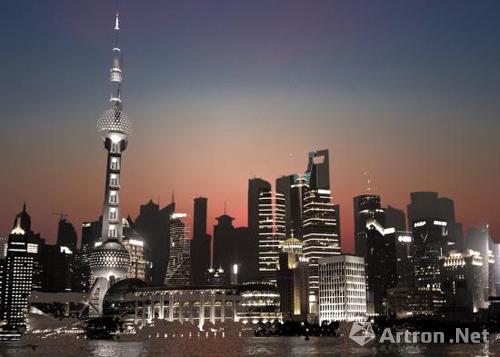
NIHAO, SHANGHAI! Conference:Shanghai Project Inaugural Event
Date:
December 12 – 13, 2015 (Saturday and Sunday)
Conference Venue:
Pudong Library
Auditorium 1, First Floor
No. 88, Qiancheng Road
Pudong District, Shanghai China
Shanghai Project
The Shanghai Project is a hybridized international arts festival that brings together
mixed teams of culture and arts practitioners from both Shanghai and abroad and from
various fields—including contemporary art, film, literature, architecture, design,
performance, and education. The ideas and methods generated from these teams of
researchers will form the basis for exhibitions, performances, lecture series, and
publications projects to be held across the city from September 5 – November 13,
2016.
The Shanghai Project is also a cultural forum through which the inhabitants of
Shanghai can speak to and participate in, cultivating a healthy and creative cultural
milieu. In particular, this first edition of the Shanghai Project will be launched to
develop a network of institutions, independent spaces, collectives, and individual
creators, to function as an inclusive platform making connections and initiating
projects.
Nihao, Shanghai! International Conference
The Shanghai Project will hold its inaugural event, Nihao, Shanghai! an international
conference, at the Pudong Library on December 12 – 13. Co-organized with
Shanghai University, the conference proposes an examination of the city from
different points of entry: from the daily lives of its citizens to cinematic, literary and
popular representations of Shanghai old and new; from the rapid emergence of
museums and cultural institutions to the architectural, social, and demographic
transformations of the city; and from the production of art and design to new forms of
urban spectacle. The conference is organized into four panels, scheduled over two
days: The City in Myth and History, Who is the Audience?, Culture State/State of
Culture, and City as Image.
The title of the conference, Nihao, Shanghai! is derived from the Hanyu Pinyin, or
official phonetic transcription, of the greeting 你好, 上海! or "Hello, Shanghai!".
This conference will serve as both greeting and welcome, first to the residents of
Shanghai, and second to our international guests, to explore and engage in the artistic
heartbeat of this city. In the same way that ‘Nihao, Shanghai!’ is neither English nor
Mandarin Chinese, the conference is planned as a mutually legible middle ground that
highlights Shanghai Project's intended role as a nexus connecting the varied publics
of Shanghai with existing cultural infrastructure both at home and abroad. Hosted by
the new Pudong Library, one such cultural infrastructure, Nihao, Shanghai! will be
free and open to the public, two essential components for enlisting the city's
inhabitants in Shanghai's recent creative renaissance.
Planned as the first in-depth conversation initiated by the Shanghai Project, we have
invited a broad spectrum of speakers, from visual artists, writers, and architects, to
educators, scholars, critics, and curators. Hans Ulrich Obrist, Co-director of the
Serpentine Galleries, will deliver the keynote for City as Image and moderate the
panel on The City in Myth and History. Also speaking on the topic will be Sue Anne
Tay,writer and documentary photographer behind ShanghaiStreetStories.com. The
British-Indian sculptor Anish Kapoorand Larys Frogier, Director of Rockbund Art
Museum, will examine the various publics of Shanghai in Who is the Audience?, a
panel moderated by writer and curator, Carol Yinghua Lu. And curator, arts writer,
and Executive Director of OCAT Xi’an, Karen Smith, will participate in the panel on
Culture State/State of Culture, along with Professor of East Asian Studies and
Comparative Literature at NYU, Zhang Xudong.
The discussions generated from these four panels will set the ground for a yearlong
investigation of Shanghai in preparation for the opening of Shanghai Project in
September 2016.
NIHAO, SHANGHAI!Conference Schedule
Saturday, December 12
09:00-09:30 Registration
09:30-10:00 Opening Remarks by Yongwoo Lee(President of the Shanghai Project, Executive
Director of the Shanghai Himalayas Museum) and Wang Dawei(Dean, Fine Art Academy, Shanghai
University)
Session 1:The City in Myth and History(10:00-13:10)
Modern cities tend to get swept up in novel development practices and trends leaving few
material traces of their own past. At the same time, the large movements of people accompanying
these transformations exacerbate such erasures as new groups of inhabitants are consistently
introduced to the city and brought into novel juxtapositions with older constituencies, all the while
suspending social and cultural identities of city dwellers in a state of constant flux.
In this panel we would like to closely examine this most recent iteration of the
reconstruction of the memory of Shanghai in myth and history. Shanghai appears to be a place
where multiple memories of the past are activated. But how are these memories activated, how are
they produced and transformed with time, and what are the mediums that inflect this process?
How are such recollections embellished by iconic literary and cinematic representations, rhythms
of everyday life, or even traumatic historical events? Lastly, why does it appear that the rapid
transformation of the city in the past 25 years creates as many versions of the past to rival visions
of the future? And can they be represented by any single mode of expression, whether idealized,
romantic, fictional or factual?
10:00-10:30 Keynote by Norman Klein(Professor, CalArts, Los Angeles)
10:30-11:50 Presentations by
• 10:30-10:50 Francesca Tarocco(NYU Shanghai, co-founder and co-director Shanghai
Studies Society)
• 10:50- 11:10 Zhu Dake(Professor, Institute of Cultural Criticism, Tongji University,
Shanghai)
• 11:10-11:30 Sue Anne Tay (writer and documentary photographer behind
ShanghaiStreetStories.com)
• 11:30-11:50 Gu Jun (Professor,School of Sociology and Political Science, Shanghai
University)
11:50-12:50 Discussion led by Moderator: Hans Ulrich Obrist(Co-director of the Serpentine
Galleries, London)
12:50- 13:10 Q & A
Session 2:Who Is the Audience?(15:30-18:00)
‘Public’ refers to a shared identity or collective interest and the resulting claim to
inclusiveness; further it implies a forum for popular participation as a means to recognize, define
or contest such understandings, identities, values and interests. When considering the engagement
of a public, one must look to the metrics publics use to identify themselves, the rhetoric employed
to deliver and mediate information between audience and material, and the tools needed to
measure levels of engagement, ultimately determining the efficacy of mediated programming.
With the constant renewal of Chinese urbanscapes and the fluctuating populations that inhabit
cosmopolitan metropolises like Shanghai, what does it mean to develop cultural programming
whereby the participation is conscientious of the cultural needs of the diverse publics?
Unlike majority of the world’s largest metropolises that are established as political or
manufacturing centers, Shanghai is known for its trade-driven economy, and its role both as a hub
for China and a gateway between the East and West. Given Shanghai’s demographic diversity and
the constant transience of “outsiders” (i.e. migrants, commuters and foreigners), a singular
“public” does not give an accurate depiction of the “real” city with a population that surpasses 24
million. In light of the city’s spatial, politico-economic, and migratory history, what are the other
identities and characteristics that comprise Shanghai's publics?
15:30-16:00 Keynote by Anish Kapoor(Artist)
16:00-16:40 Presentations by
• 16:00-16:20 Larys Frogier(Director of the Rockbund Art Museum, Shanghai)
• 16:20- 16:40 Zhang Pingjie(Artist, curator and critic)
16:40- 17:40 Discussion led by Moderator: Carol Yinghua Lu(Researcher, writer and curator;
contributing editor for Frieze magazine)
17:40- 18:00 Q & A
Sunday, December 13
09:30-10:00 Registration
Session 3: City as Image(10:00-12:50)
Although the strict definition of a city lies in the lines and forms of its buildings and streets,
the city extends beyond its physical manifestation and encompasses the perception of both its
community and its culture. In the tightly packed limits of the world's megacities, a supposed state
of disorder reflects the city's potentiality and possibility for the future. Despite the anonymity of
life in a global city, a megacity's inhabitants are empowered by the outsized impact their actions
can have on the city and the world at large.
This conference session will explore the ways in which image, spectacle and chaos intersect
in the context of Shanghai. The city is often identified with a stylized and glamorized past
reflecting an impression of the city held not perhaps by Shanghainese residents, but by foreigners
encountering the city. However, upon declaring Shanghai’s ambition for growth, the construction
of a spectacle-laden cityscape both created and re-enforced Shanghai's global future. Are
modernity and spectacle mutually dependent? How and in what ways is Shanghai's modernity
perceived as reflecting a vision of a singularly Chinese modernity? How does the Chinese
manifestation of spectacle both speak to and not speak to the Western understanding of it?
10:00-10:30 Keynote by Hans Ulrich Obrist(Co-director of the Serpentine Galleries, London)
10:30-11:10 Presentations by
• 10:30-10:50 MAP Office(multidisciplinary platform devised by Laurent Gutierrez and
Valérie Portefaix, HK)
• 10:50-11:10 Ling Min(Professor, Fine Arts Academy, Shanghai University)
• 11:10-11:30 Marysia Lewandowska(Artist in Residence, Asia Art Archive, HK)
11:30- 12:30 Discussion led by Moderator: Yu Ting(Deputy Director, Urban Design Institute,
Shanghai Xian Dai Architectural Design Group )
12:30-12:50 Q & A
Session 4:Culture State/State of Culture(14:30-17:20)
The “culture state” and “state [of] culture” are twin concepts that are mutually determinant.
While “culture state” denotes the project of building a society through the arts, beliefs, customs,
and other modes of human expression, the “state [of] culture” points to the conditions and
development of cultural infrastructure such as institutions, individual producers, and supporting
organizations. The two concepts together connote the coupling of political-ideological interests
with economic-industrial motivations of the state in promoting cultural production.
Shanghai, in this current “post-Expo” phase of development, aims to establish the city as
China’s cultural capital and as a global cultural metropolis on par with London, Paris, and New
York. Concerted cultural development, evidenced by a burgeoning ecology of museums, theaters,
festivals, culture complexes and industry clusters, intends to signal that the city has “arrived” as a
global metropolis in the 21st century.
What are the material and immaterial conditions necessary to foster a healthy
creative/cultural milieu? Have economic liberalization and global integration also opened spaces
for new forms of cultural production? How might Shanghai reconcile its planning driven approach
with alternative forms of cultural activity as they develop art-engaged publics? Although this
“state [of] culture” may be happening worldwide, what is unique about Shanghai’s situation?
14:30-15:00 Keynote by Zhang Xudong(Professor of East Asian Studies, Comparative Literature,
NYU; Professor, School of Humanities, Peking University)
15:00-16:00 Presentations by
• 15:00-15:20 Ben Wood(Architect, Studio Shanghai)
• 15:20- 15:40 Ying Zhou(Architect, Swiss Federal Institute of Technology, ETHZ)
15:40- 16:40 Discussion led by Moderator: Karen Smith(Executive Director of OCAT Xi'an)
16:40-17:00 Q & A
17:00-17:15 Closing Remarks
艺术号作家
- 奥岩
- 蔡万霖
- 曹兴诚
- 陈孝信
- 陈建明
- 陈 曦
- 陈晓峰
- 陈东升
- 邓丁三
- 杜曦云
- 段 君
- 冯家驳
- 陈 墨
- 郭庆祥
- 杭春晓
- 何桂彦
- 何光锐
- 胡 人
- 孔达达
- 廖廖
- 黄 专
- 季 涛
- 冀少峰
- 贾方舟
- 贾廷峰
- 李国华
- 李公明
- 李小山
- 王正悦
- 刘幼铮
- 刘尚勇
- 帽哥
- 刘双舟
- 刘九洲
- 刘礼宾
- 刘骁纯
- 刘 越
- 林明杰
- 鲁 虹
- 吕 澎
- 吕立新
- 马学东
- 马 健
- 彭 德
- 彭 锋
- 邵玮尼
- 沈语冰
- 水天中
- 宋永进
- 孙振华
- 孙欣
- 陶咏白
- 佟玉洁
- 王春辰
- 王栋栋
- 王端廷
- 王凤海
- 王 萌
- 王南溟
- 王小箭
- 吴念亲
- 西 沐
- 夏可君
- 夏彦国
- 徐子林
- 姚 谦
- 杨 卫
- 一西平措
- 殷双喜
- 尹 毅
- 尤 洋
- 于 洋
- 岳 峰
- 张 辉
- 张翛翰
- 战 平
- 赵 力
- 赵 榆
- 周文翰
- 朱浩云
- 朱绍良
- 朱万章
- 史金淞
最新文章
热门文章
博客·论坛热点
-
高校美术实践教育的当...
高校美术实践教育在过去的几十年里的发展几乎是不尽如人...详情
- 责任编辑:杨晓萌
- yangxiaomeng@artron.net
- 010-84599337-847

